
What is a fractional CMO and why Indian startups need one in 2026
By Nimitt Bhatt · 18 June 2026 · 10 min

Most Indian startups under INR 50 crore ARR cannot afford a real CMO. The kind who has actually built a brand from nothing, run a P&L on a paid channel through three CAC cycles, sat in a board review and explained why a bad quarter happened without hiding behind a dashboard, and said no to a founder more than once. So they hire a marketing manager at INR 18 lakh, hand them the entire stack, and wonder six months later why nothing compounds and every channel looks like it is running on 20 percent effort.
A fractional CMO is the practical fix. You buy senior judgement on two or three days a week, at roughly one third the cost of a full-time hire, and you skip the eighteen-month ramp. When the model works, it is the highest-leverage senior hire an Indian startup can make between Seed and Series B. When it fails, it is usually because the founder wanted a doer with a fancy title, not a leader with a scarce calendar.
What a fractional CMO actually does, week by week
- →Owns the marketing strategy for the next four quarters, written down as a real plan, not vibes on a Notion page
- →Sits in pricing, positioning and ICP debates with the founder, not just in campaign reviews and Friday retros
- →Hires and manages the junior marketing team, agencies and freelancers, so the founder stops being the single point of failure
- →Picks two or three channels that fit your stage and kills the rest, instead of running everything at half attention and blaming the market
- →Sets the metrics that matter: pipeline, qualified enquiries, CAC, payback and retention, and reports on them in a founder-readable format
- →Runs a weekly ninety-minute working session with the founder and a fortnightly review with the team, showing up prepared, not improvising
What a fractional CMO is not
A fractional CMO is not a freelance ad buyer. Not a content writer. Not a growth hacker with a Notion template. Not a person who logs into Meta Ads Manager on your behalf on Tuesdays. If the conversation in the first call is about channels before it is about ICP, positioning and pricing, you are buying the wrong service. And if the operator cannot rewrite your homepage headline in twenty minutes and defend the change on a call with sales, they are a consultant, not a CMO.
The five moments an Indian startup should hire one
- →You have crossed INR 5 crore ARR and the founder is still functionally the head of marketing, spending 15 hours a week on it and losing the same time on product
- →You are raising a Series A in the next six to nine months and the deck needs a real GTM story, not a Canva-shaped one and a hopeful CAC number
- →Paid CAC has crept up for three quarters, retention on the newer cohorts is softer, and nobody on the team can explain the underlying why in plain language
- →You are about to spend over INR 50 lakh a year on an in-house team and you have no written plan for what any of them will own
- →Organic and brand have been on the back burner for two years, pipeline is shrinking, and the founder senses the paid channel is now a treadmill
"A fractional CMO does not run your marketing. They make sure the right marketing gets run, by the right people, against the right number, in the right order."
What a fractional CMO costs in India in 2026
Realistic ranges: INR 2.5 lakh to INR 6 lakh per month for two to four days a week, depending on the operator's seniority, the scope of ownership, and whether team management is included. A full-time CMO with comparable experience would land at INR 80 lakh to INR 1.6 crore CTC, plus ESOPs, plus a nine-month hiring cycle, plus a six-month ramp. The arithmetic is not subtle. What is worth negotiating is not the day rate but the shape of the engagement: how many working days a week, how many hours of async, which board and leadership meetings are included, and how the transition to a full-time hire is planned from day one.
The failure modes to avoid
- →Hiring a fractional CMO with no in-house junior to execute the plan, senior time gets burnt on operational work and the strategy never lands
- →Signing a three-month engagement, strategy takes a full quarter to be visible and any shorter cycle is just an expensive audit
- →Reporting only on channel metrics and never on pipeline, the arrangement drifts into being an execution manager instead of a leader
- →Refusing to give the fractional CMO real hiring authority, they end up unable to change the team that is producing the flat numbers
- →Treating the role as permanent, the honest ceiling of a fractional engagement is 12 to 18 months, after which it either converts or shrinks to advisory
How this compares to a growth advisor and a marketing consultant
A consultant produces a plan and leaves. A growth advisor pressure tests the plan on a monthly cadence but does not own the outcome. A fractional CMO owns the outcome, sits in the weekly leadership review, hires and manages the team, and is on the line for the number at the next board. If the founder wants to hold onto the CMO title and simply buy expert hours, a growth advisor is the right fit. If the founder wants the seat filled without a full-time hire, a fractional CMO is.
How this connects across the site
SEO is one of the cleanest channels for a fractional engagement because the work compounds long after the senior hours stop. Our growth advisory engagement is built this way: senior strategy, ICP and content leadership from Nimitt, executed by a tight bench, reported on pipeline and revenue, not on rankings. For a founder-first take on why an SEO agency retainer is often the wrong first move at this stage, see why hiring an SEO agency is the wrong move for B2B startups and, for pricing discipline, what an honest SEO retainer in India actually buys in 2026. For founders who want SEO inside a broader GTM, the B2B SEO marketing agency and SaaS SEO consultant pages show the shape.
Frequently asked questions
- How is a fractional CMO different from a marketing consultant?
- A consultant gives you a deck and leaves. A fractional CMO owns the outcome, sits in your weekly leadership review, hires and manages your team, and is on the line for the number. They are an embedded leader on part-time hours, not an external advisor.
- Can a fractional CMO replace a full-time marketing hire?
- For most Indian startups under INR 50 crore ARR, yes, often better. You get twenty years of judgement on two days a week instead of three years of experience on five. Once you cross that scale or need a public brand face, a full-time CMO starts to make sense.
- How long does a typical fractional CMO engagement run?
- Six to twelve months is the honest range. Anything under six months is too short to see strategy land, and after twelve months you should either convert the role to full-time or shrink it to an advisory cadence.
- How many days a week should a fractional CMO actually work?
- Two to three days is the sweet spot for most Indian startups between INR 5 and INR 50 crore ARR. Below two days the engagement drifts into advisory and the outcome slips. Above four days the price starts to overlap with a mid-band full-time hire and the leverage disappears.
- Who should own paid media if the fractional CMO does not?
- A junior in-house performance marketer, a specialist agency, or a senior freelancer, reporting into the fractional CMO. The CMO sets the target CAC, the channel mix and the creative brief. Owning the platform button-clicking themselves is a waste of senior hours.
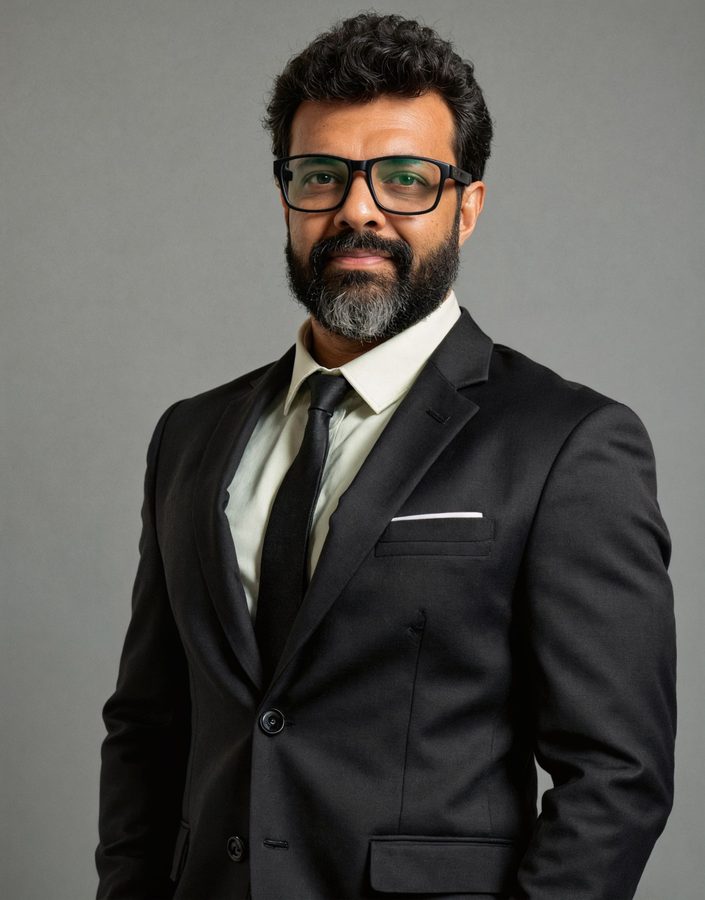
Nimitt Bhatt
Founder, SEO Rise. MBA, PGDM in Digital Marketing & Communications, and 20 years across sales and marketing leadership at Reliance Jio, Vodafone and ICICI, now running founder-led SEO advisory across India.
I started SEO Rise in 2024 to work directly with founders and marketing leads, no account managers in between. Every audit, every plan and every reply comes from me.
Tell Us What You Need